

July 7, 2026
Acumen
In this second episode, Roger Brindley, Special Advisor at Acumen, defines and describes the TNE continuum. One size does not fit all, and extraordinary opportunities exist to align transnational partnership development with the institutional mission and the vision for the future.
As a sector, higher education has benefitted enormously in recent decades from international students seeking the academic excellence and residential life of North American education. However, as the vast majority of students around the world are unable to afford financial access to international education and seek domestic institutions, other globally facing universities have created academic access without students being required to face the prospect of uncertain travel and fickle visa policies. Over the last decade, UK universities have seen a 70% increase in international students studying offshore, and this year for the first time the number of international students studying overseas may surpass the 685,000 international students studying in residence in the UK. Similarly, Australian institutions have grown into the TNE space with RMIT reporting 21,000 offshore students.
The Global Alliance for Transnational Education (GATE) defines TNE as:
“Any teaching or learning activity in which the students are in a different country (the host country) to that in which the institution providing the education is based (the home country). This situation requires that national boundaries be crossed by information about the education, and by staff and/or educational materials.”
TNE extends beyond teaching and learning activity to include significant cohort-driven student engagement, university research activity and community engagement for positive societal change. Universities should understand and monitor their most productive interdisciplinary research partnerships, as those established and trusting relationships can become a source of important articulation agreements.
There are opportunities for extraordinary innovation in the delivery of curriculum at the intersection of academic and research goals in these strategic partnerships. TNE runs on a continuum from modest and targeted initiatives, such as faculty development workshops conducted over a matter of a few weeks, or non-credit bearing micro-credentials all the way to longitudinal, accredited, and regulated international branch campuses (IBC’s). However, it is important to note IBC’s represent a very small fraction of the broader institutional partnership opportunities across national boundaries. More typically, the ‘home’ institution seeks a collaborative approach with a ‘host’ partner involving academic articulations around shared coursework, such as twinning and dual degrees, the cohort recruitment and movement of students between campuses, and co-branding into the market. In these scenarios very often the academic curriculum is powered by the home institution, with the host institution providing courtesy-appointed faculty or adjunct instructors while overseeing campus life, student success, and pastoral care. Typically, the host institution will also bring its state/national reputation and admissions network, together with marketing around the proposition of this ‘premium’ academic degree.
In multifaceted partnerships there will be joint research funding opportunities, data collection on location, movement of faculty researchers and graduate students and even the development of research institutes or centers. Recruitment is also shared, with different tracks developed to allow for multiple entry/exit points. For example, given the current uncertainty with US student visa approval, any 2+2 academic articulation must offer the student the opportunity to graduate at the host institution should they be unable to travel to Canada or the United States.
It’s also critical to plan for how the TNE partnership can benefit the local communities in-country without completing a full degree. The student could complete a short-term academic experience designed to ‘upskill’ for workforce and career development. This could be as short as an on-line or ‘hub’ based executive weekend workshop, through self-paced micro-credential modules, to full certificate programs for stackable masters degree credit where the student chooses if they will matriculate into the degree or not. Should they choose to stack their certificate into the degree program, they can then complete a residential non-thesis masters at the home campus in just a year thereby significantly increasing their financial access. However, the certificate experience alone in the right content areas would be highly beneficial for the contemporary skills of the local labor force with the associated benefit for the broader economy. For example, a student may not want a masters in computer science, but could seek a specialized certificate such as software design, applied AI, cyber security, or engineering management. Similarly, a business certificate might include data informatics, supply chain management, quantitative accounting, etc.
Tremendous opportunity exists to strengthen global partnerships through transnational education. Whether the institution is a large research university or a small private college, whether the focus is practitioner-based development or full degrees, and whether the scale is for academic delivery to a few dozen or tens of thousands, institutions can develop partnerships with the vision and mission of the institution firmly in mind.
Share
Recent Posts
Acumen at NACAC 2026: Driving Value in International Admissions
October 6, 2026
Shift from Volume to Value As over 6,500 admissions leaders gather in Minneapolis for NACAC 2026 (8–10 October), higher education faces a critical...
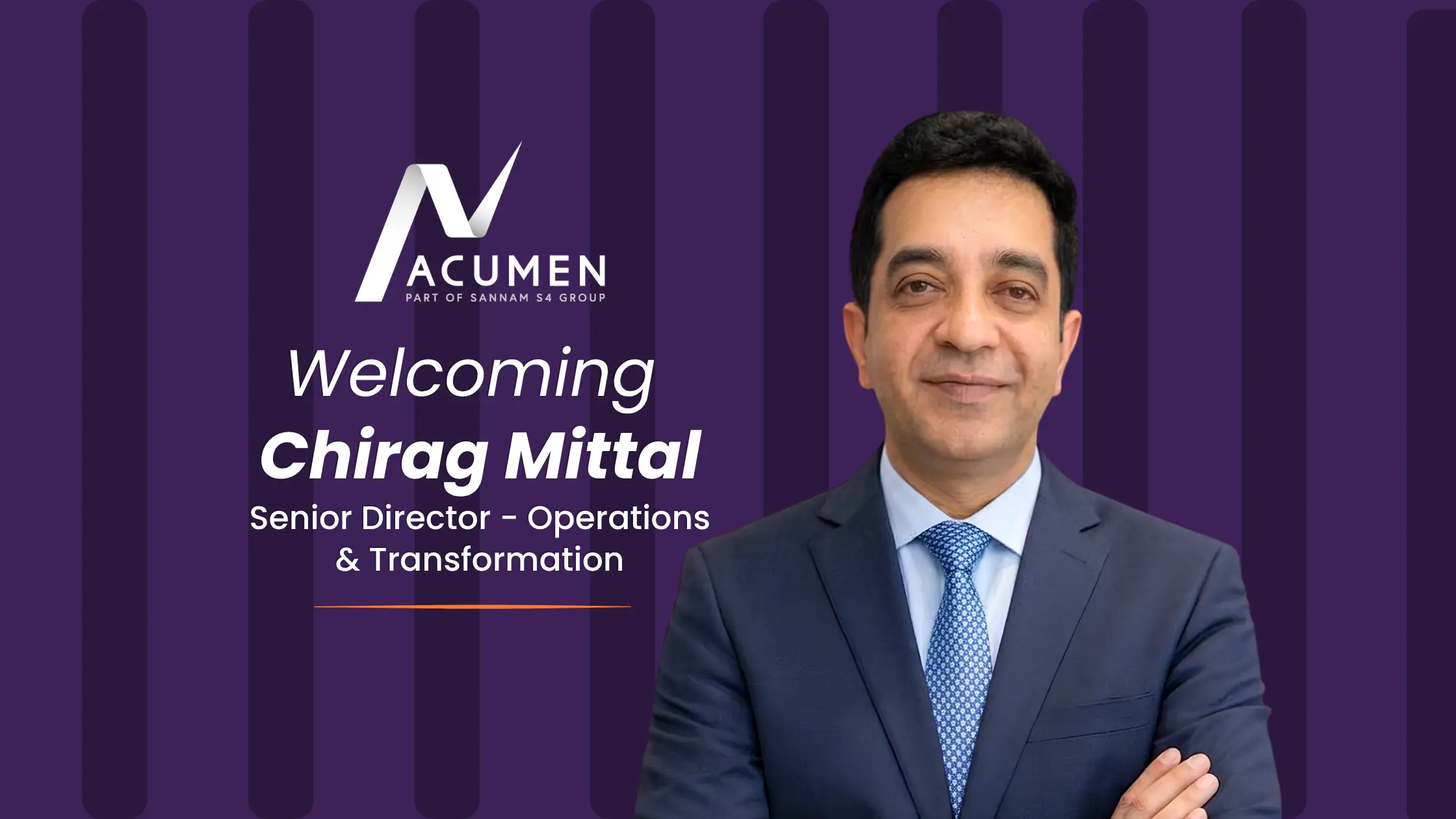
Acumen appoints Chirag Mittal as Senior Director – Operations & Transformation
September 30, 2026
We are delighted to welcome Chirag Mittal to Acumen as Senior Director – Operations & Transformation, based in New Delhi and working across...
From mobility shock to strategy-led TNE
September 16, 2026
A recurring theme in my recent conversations on international education has been the growing friction in traditional student mobility. I increasingly think the...