

May 25, 2026
Acumen
Acumen is pleased to present a three-part series exploring the need and opportunity for universities seeking to develop global partnerships around transnational education.
This series presents the expert view of Dr. Roger Brindley, Acumen’s Special Advisor, drawing on his 30-year legacy in international higher education as the former Vice Provost for Global Programs at Penn State and former Vice President of USF World.
Episode One
Hiding in Plain Sight: The World Will Not Wait
Episode One focuses on the demand for higher education across the world to grow rapidly. This episode juxtaposes the extraordinary global demographic needs at a time of predicted declines in domestic university student populations in the United States and Canada.
2025 was recently described by Alex Usher at the Higher Education Strategy Associates as a ‘monster’ while Brad Wolverton at the Chronicle of Higher Education thought this was a ‘year of chaos.’ As the broader higher education sector has been battered and bruised in the United States and Canada, this has also been reflected in a tumultuous year for international education.
Headwinds in the US and Canada: Declining International Mobility
Issues related to the mobility of students anxious about the unpredictable visa process, and the perception of an unwelcome society in the United States and Canada have resulted in international students choosing other countries to continue their studies across this highly competitive global landscape. The Institute of International Education (IIE) Fall 2025 Snapshot reported a 17% decline in new international student enrollment at U.S. colleges and universities. Meanwhile ICEF reports International student recruitment in Canada has fallen 30% in the last two years. Forbes recently reported that the 2026 recruitment year is shaping up to be equally challenging. Enrollment managers know that two consecutive years of significant declines will lead to a somber reappraisal of current strategies.
The Demographic Imperative: Why Global Demand is Rapidly Growing
Yet, the global demand for high-quality international education is rapidly growing. Consider India’s unprecedented demographic profile with 65% of its population under the age of 35, and with only 3% of Indian students studying overseas. Today, government plans call for domestic higher education enrollment to increase from 45M today to 80M in the next ten years. Imagine nearly doubling any higher education system in just ten years! India expects the working-age population (15-64 years) to peak at over 1 billion by 2040. Indeed, today India represents nearly one-fifth of the global working-age population, and with rapid urbanization and over 850 million internet users by 2030, the nation desperately needs upskilling and an educated workforce. China faces extraordinary pressures too, as each year 14 million high school graduates take the Gaokao and frantically chase 4.5 million Chinese university places.
Beyond the ‘Big Two’: Surging Need Across the Globe
In Vietnam, where the financial middle class has doubled from 13% to 26% in just the last three years, there are 23 million citizens aged 16-30.
In Indonesia, the population has increased in just 20 years by 57 million (almost as much as the total population of Italy) to 287 million and the government’s financial commitment to education now accounts for 20% of the national budget.
In Egypt, where the country faces a 28% population growth in just 15 years, 21 million citizens are aged between 18 and 29, but only 11.8% of those aged 18–24 have completed college.
In Nigeria approximately 1.8 to 2M high school students sit the university entrance exam each year but Nigeria’s tertiary education system can only accommodate roughly 750,000.
And the list goes on, and on. Across the global south – the majority world – higher education has been completely inundated by economic and demographic pressures.
A Start Contrast: Global Need Meets Domestic Decline
Juxtapose this to the United States where despite a 2% increase in enrollments from 2024 to 2025, 38 states are facing a declining high school demographic, and 33 states have a year-on-year combination of budget cuts or inflation-adjusted declines to higher education. The message at a time of highly unpredictable international student mobility is clear. Many countries need to rapidly accelerate accessibility for their surging youth demographics, and yet their higher education sector is currently unable to meet prospective student demand.
Critical Questions for Institutional Strategy
This raises a number of critical questions for US and Canadian higher education:
- To what extent do your institutional mission, vision, and goals include maintaining a global presence? For universities planning to remain globally-facing, how are you navigating the current disruptive landscape?
- If committed to retaining a global presence, how do you build your international student profile at a time when the international student proposition has been weakened in the marketplace and mobility has become fundamentally unpredictable?
- If committed to retaining a global presence, how do you maintain resilience and identify new research partners at a time when domestic external funding is under significant pressure, and foreign universities seek to poach your most successful faculty?
The Urgency of Authentic Global Partnerships
To remain globally relevant, leading US and Canadian institutions must become involved in authentic global partnerships that are mutually beneficial, require clear and achievable objectives and are structured to be sustainable in the long term. Universities must ask themselves how their groundbreaking research can be applied to benefit societies, and how their academic excellence can support positive societal outcomes, around the world.
Governments around the world will not wait for US and Canadian Universities. They have no choice but to engage in developing higher education. Will we partner with them or leave that to our global competitors?
Share
Recent Posts
Acumen at NACAC 2026: Driving Value in International Admissions
October 6, 2026
Shift from Volume to Value As over 6,500 admissions leaders gather in Minneapolis for NACAC 2026 (8–10 October), higher education faces a critical...
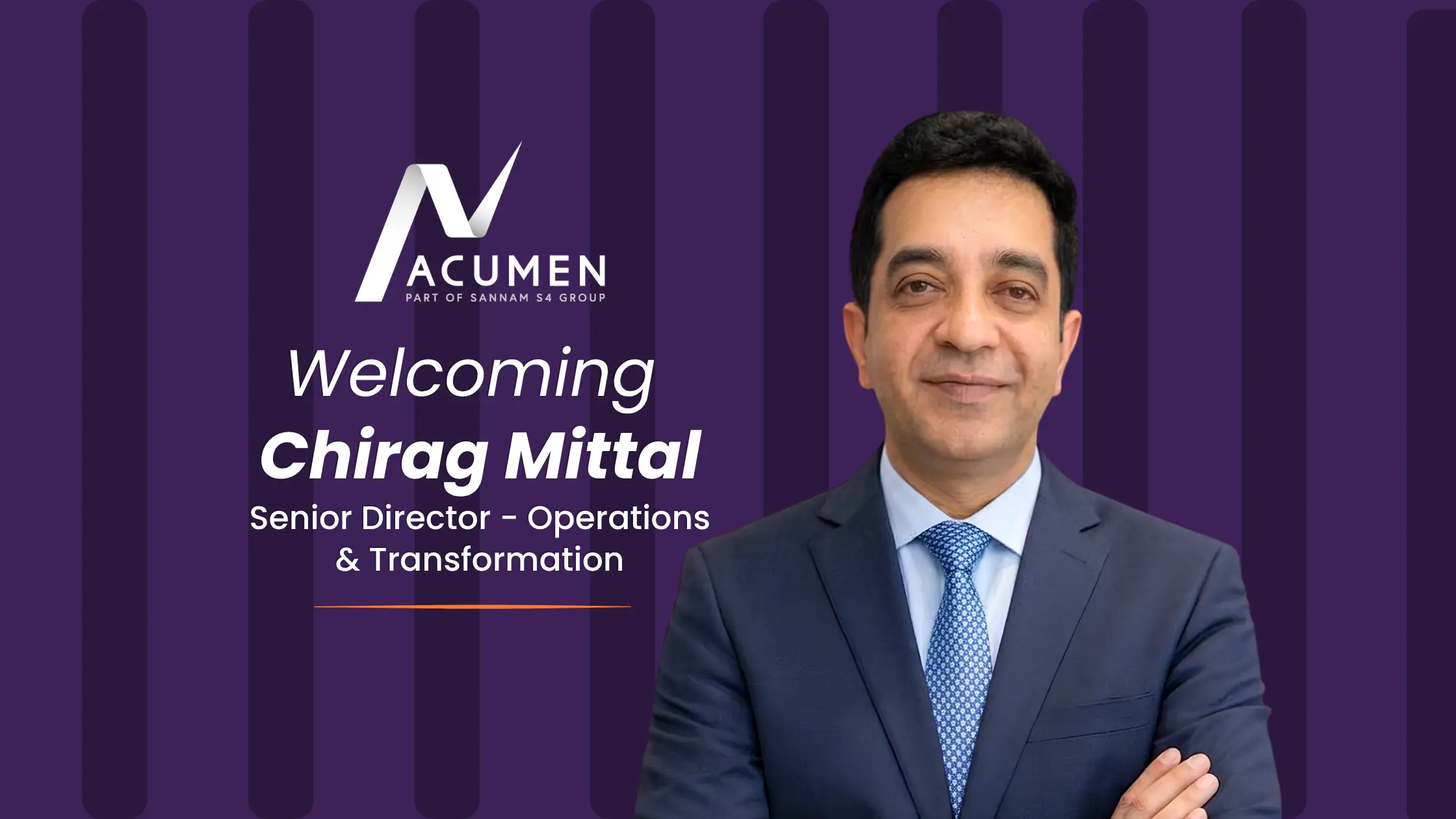
Acumen appoints Chirag Mittal as Senior Director – Operations & Transformation
September 30, 2026
We are delighted to welcome Chirag Mittal to Acumen as Senior Director – Operations & Transformation, based in New Delhi and working across...

From mobility shock to strategy-led TNE
September 16, 2026
A recurring theme in my recent conversations on international education has been the growing friction in traditional student mobility. I increasingly think the...