

April 30, 2026
Acumen
Anthony Guarnaccia, Partner Development Director, North America shares his thoughts on the recent changes in Vietnam, and the opportunities it presents for U.S. universities.
Beyond the Ticker: What Vietnam’s Market Upgrade Means for U.S. Universities
The recent decision by FTSE Russell to upgrade Vietnam to Secondary Emerging Market status is being framed as a win for global investors.
For U.S. higher education, it signals something more consequential: a structural shift in how Vietnamese students – and their families – approach international education.
1. A More Sophisticated Economy Requires More Specialized Talent
With the upgrade, Vietnam is expected to attract $1.5–$6 billion in new inflows from a combination of:
- Foreign Direct Investment (FDI) – long-term corporate investment
- Foreign Institutional Investment (FII) – capital from global asset managers and institutional investors.
The anticipated expansion of global firms – including asset managers such as BlackRock and Vanguard – alongside smaller private equity and institutional funds, will further accelerate the development of Vietnam’s financial ecosystem.
At the same time, the development of an International Financial Centre in Ho Chi Minh City is expected to increase demand for expertise in cross-border finance, regulation, and investment structuring.
Together, these shifts will place a premium on graduates who can operate in a common global “financial language” across both multinational firms and Vietnam’s growing domestic economy.
We anticipate growing demand for:
- MBA programs (particularly those with finance and strategy pathways)
- Master’s in Finance / Financial Analytics
- International, Financial, and Investment Law programs
- STEM-aligned business degrees (FinTech, Data, Economics)
This is not just increased demand, but is more selective, career-driven demand.
2. The Rise of the ROI-Driven, Career-Focused Student
As Vietnam’s economy moves up the value chain, student behavior is evolving alongside it.
Families are increasingly:
- Focused on return on investment
- Evaluating outcomes in terms of career trajectory and employability
- Seeking degrees that provide access to leadership roles in globally integrated industries.
A U.S. degree is no longer viewed solely as an international experience. It is becoming a strategic pathway into Vietnam’s emerging knowledge economy, particularly within finance and multinational corporate environments. This is particularly evident in fields tied to Vietnam’s financial sector development, where students increasingly view graduate education as a pathway to accessing higher-value roles.
3. A Rapidly Growing Market Is Now Entering a New Phase
Vietnam is already one of the most dynamic student markets for the United States. According to Institute of International Education Open Doors data, Vietnam is now the 5th largest source of international students to the U.S. This is a remarkable rise that reflects both strong demand and sustained outbound mobility. What is changing, however, is not just the scale of outbound mobility, but its intent.
The FTSE upgrade is likely to accelerate this trajectory, but also change its composition:
- Greater share of graduate-level applicants
- Increased focus on career-aligned programs
- Intensifying competition from the UK, Australia, and regional education hubs.
Institutions that continue to treat Vietnam as a traditional undergraduate market risk missing where it is heading.
4. A Narrowing Window for Strategic Repositioning
This moment presents a clear opportunity, but one that will not remain open indefinitely.
U.S. institutions should be actively considering how to:
- Reposition for Graduate Growth & Finance-Led Growth
Align program portfolios with demand for finance, business, analytics, and regulatory expertise
- Link Education to Financial Sector Employment
Clearly articulate pathways from degree to roles in Vietnam’s evolving financial and corporate ecosystem
- Deepen Corporate Engagement
Build relationships with multinational firms and financial institutions expanding in Vietnam.
Institutions that fail to respond risk being outpaced by institutions that are already aligning their recruitment strategies with Vietnam’s transition into a finance and knowledge-driven economy.
The Bottom Line
The FTSE Russell upgrade is a signal that Vietnam is moving up the global value chain. When economies evolve, student behavior follows.
At Acumen, we see this clearly: as Vietnam’s markets integrate more deeply with the global economy, its talent will do the same.
The institutions that recognize this shift early, particularly the move toward graduate and finance-focused education, will define the next decade of engagement in Southeast Asia.
Share
Recent Posts

From mobility shock to strategy-led TNE
September 16, 2026
A recurring theme in my recent conversations on international education has been the growing friction in traditional student mobility. I increasingly think the...
Looking to the future: Understanding the Transnational Education Proposition
July 7, 2026
In this second episode, Roger Brindley, Special Advisor at Acumen, defines and describes the TNE continuum. One size does not fit all, and...
Acumen Supports JETRO Initiative to Strengthen Industry–Talent Linkages Between India and Japan
June 12, 2026
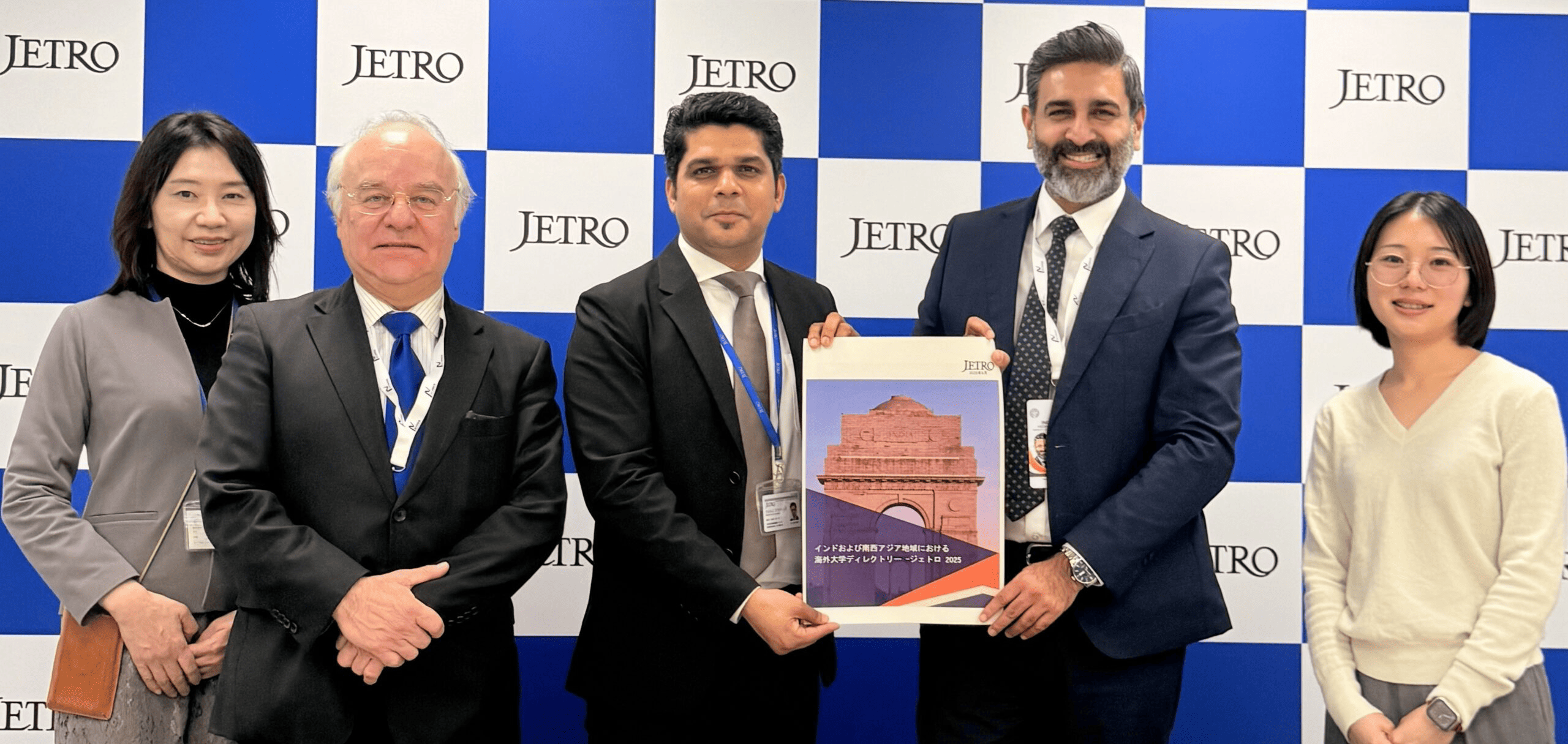
Acumen announced the successful delivery of a year-long engagement with the Japan External Trade Organization (JETRO), focused on strengthening connections between Japanese industry...